Showing posts with label Media Center. Show all posts

Monday, February 24, 2020

Students Identify Disinformation Using Stanford’s COR Method: Coronavirus, Fact Checking & Lateral Reading


Recently our high school media specialist, Ann Kaste, taught all Minnetonka High School ninth grade students Stanford's Civics Online Reasoning method for fact checking information. This is a newer, research proven strategy for discerning fake news. The core principle behind the method is to teach students to think like professional fact checkers.  Stanford discovered that readers practicing COR techniques were much more likely to quickly know what is false or misleading online. Rather than doing ‘close reading’ on a single webpage to examine elements such as the title, quality of the site, layout, name of the website URL, etc., readers practicing COR quickly begin opening up other browser tabs to fact check information and background of the content from several sources.  This method is called ‘Lateral Reading’. Readers using COR were much more likely than academic scholars to quickly and accurately determine the legitimacy of the information on a website. 

Ann began the lesson with a pre survey on a Google Form asking students to identify why it is important to be able to discern factual information online. One student explained why it was important to identify real from false information in this way: 

“It will help us build a more informed population that can make decisions for themselves without influence from others telling them what to think. It also makes the truth more clear so we don’t need to question whether something is true or false.”

Once students understood and expressed the importance of learning these skills, Ann explained and demonstrated the COR method. She showed the students some screenshots of real coronavirus Tweets. She modeled how to use the COR method to fact check the information on websites cited in the Tweets. She pointed out that some of this news is actually “bent” from the truth, not outright fake. Ann asked students the 3 COR questions: “Who’s behind the information? What’s the evidence? What do other sources say?”

Although many students may state that they already know how to ask these questions, Ann explained, “We know how to throw a baseball but we need to practice to get better at it.” The students then worked in partners to pick one of over 20 example coronavirus related Tweets and use the COR method to determine fact from fiction. Students quickly began investigating the Tweets using the COR method and then shared their findings with the group.

Having the ability to quickly identify fact from fiction online is a necessary media literacy skill in today’s world. Starting in elementary school and on into high school, our media specialists work to teach students research skills so they will be prepared for the future. This is part of an ever changing and adapting media curriculum that evolves in tandem with core classroom curricula.

Learn more about Minnetonka's Media Program:

Monday, August 20, 2018

Newly Remodeled Collaborative Learning Spaces at Minnetonka High School


Summer is a time in schools when construction projects and renovations can take place. In the past I’ve written about some of our media center remodels as well as our Design for Learning initiative. This summer we have a few remodeling and construction projects underway in Minnetonka. 

One of the big renovation projects is at our high school. In analyzing the existing space and looking at needs we realized we had multiple locker rooms that were underutilized. Specifically, on the second floor of our high school near the gyms we had old varsity team locker rooms that weren’t really used much. Newer locker rooms had been built in the lower level of the building back in 1996 and were the main space in use. So the existing 7,000 square feet of old locker room space was available to be reclaimed for instructional purposes.

This remodeled space has been designed to be provide flexible options for classes to meet and groups to collaborate. Five new classrooms will be available as well as more restrooms. This remodel was done with existing resources to cover the costs and no new bond had to be issued. As you can see from the pictures above, things are shaping up nicely and looking more and more like the architects' renderings. This new space will be called "The Loft" and should be completed in time for the first day of school on Tuesday, September 4.


As part of the remodel, windows were added to the outside letting it a lot of natural light. Numerous flatscreen monitors will be mounted on the walls in many of the rooms for both large group presentations and smaller group meetings. There are walls of glass and other walls covered with whiteboards for writeable space. Some of our high school computer science classes will now be taught in this area. It will be exciting to see how this new space gets used in the coming school year!


Related posts:

    Monday, June 25, 2018

    Design for Learning Project Lead Nicole Snedden Wins ISTE Award


    Congratulations to Nicole Snedden, Minnetonka's Design for Learning Project Leader, for winning this year's ISTE Learning Space PLN Outstanding Learning Space Designer Award. Besides being our Design for Learning Project Leader, Nicole is also our Innovation Coordinator. "Each year, ISTE honors individuals who are leading the way in accelerating the use of technology to solve tough problems in education and inspire innovation. These winners represent a who’s who in the edtech world." Nicole received her award yesterday at the ISTE Conference in Chicago.
    Elementary Instructional Technology Coach Rachel Studnicka wrote the following about Nicole:

    Nicole is a visionary leader that fosters a learning culture for modern learners in the digital age... Nicole wanted to empower students by giving them a voice in the design of their learning spaces to impact student engagement and learning... Nicole has transformed our district through her vision and grassroots initiative to better the student learning experience by providing learner-centered environments to meet the diverse needs of all learners... She has provided teachers with innovative professional development training and opportunities to work closely with experts in design such as Cannon Design, author of The Third Teacher... Nicole’s efforts and clear vision for modern education have brought positive change for students and teachers district wide with design thinking and Human Centered Design practice.

    As stated on our website, Minnetonka's Design for Learning Committee “empowers Minnetonka students, staff and the community to transform teaching and learning through the design of the learning environment.” This team meets quarterly to:

    • Engage in conversations regarding the design of spaces in the district both present and future.
    • Offer staff development to teachers who are interested in learning about the design process.
    • Support teachers through a grant process as they apply for funding to re-envision their current learning spaces.
    • Provide research-based information to Minnetonka Teachers and Community as well as host a yearly event with guest speakers who specialize in learning spaces. 
    We are so fortunate to have teacher leaders like Nicole in Minnetonka. More info about Design for Learning in Minnetonka and a photo gallery can be found hereYou can read more about Minnetonka's Design for Learning process, see other projects and results, as well as learn more about Minnetonka Innovation in these related posts: 

    Monday, March 26, 2018

    Effective Media Specialists and Programs in Minnetonka

    Last year our media program in Minnetonka was formally reviewed by our School Board. It was the first time a comprehensive review of the media program had been done. Our media department is based on best practices and standards from AASL, ISTE, CSTA, and ITEM. Here is the slideshow from the Board presentation. Our media department co-chairs are Kelli Whiteside and Erin Carcamo.


    Future Ready Librarians- source
    In Minnetonka, we have one media specialist at each of six elementary schools, one who splits time at both of our middle schools, and one at our high school. Media Specialists at our elementary schools directly instruct students in grades 1-5 each week for about 25 minutes. Our media specialists wear many hats, from teaching to managing the print and electronic resources, providing staff development, being the first stop for technology troubleshooting, to being a building leader. Here is the job description for our media specialists

    As part of our work last year, we talked about the role of a media specialist and what makes for an effective media specialist in regards to collaboration, instruction, leadership and support. We agreed upon the following:

    Collaboration - Collaborating with educators and students to design and teach engaging learning experiences that meet individual needs. Fostering partnerships within the school, District, and broader community.

    What should media specialist collaboration look like in Minnetonka?

    • Participates actively in a cross district PLC
    • Promotes sharing of ideas and programs between media specialists
    • Connects with grade levels and departments when they meet as PLCs and as teams to create a cohesive/coordinated instructional plan.
    • Advocates for community connections such as partnerships with public libraries to create opportunities for lifelong learning
    • Develops a quality library collection - print and digital resources, immersion and English programs, connected to classroom curriculum, quality literature
    • Orients towards customer service - supports building efforts in important areas such as testing, assemblies, parent events, etc.
    • Asks for feedback - conducts time studies, surveys, etc. to identify strengths and define goals
    Instruction - Providing students and staff with instruction and resources that reflect current information needs and anticipate changes in technology and education.
    • Digital Citizenship/Internet Safety - Uses Common Sense Media and other instructional resources to teach key concepts
    • Media Literacy/Literature Appreciation - Providing access to materials in all formats, including up-to-date, high-quality, varied literature to develop and strengthen a love of reading.
    • Technology Operations/Concepts - Instructing students and assisting educators in using, evaluating, and producing information and ideas through active use of broad range of appropriate tools, resources, and information technologies.
    • Research/Information Fluency - Instructing students and assisting educators in the knowledge, integration and ethical use of quality research tools, both print and digital as well as develop strategies to evaluate information found online
    What should media specialist instruction look like in Minnetonka?
    • Initiates opportunities to push into classrooms to teach and co-teach
    • Maximizes the media specialist role as teacher - create opportunities to provide direct student instruction
    • Covers digital citizenship, literature appreciation, research/inform. fluency and technology skills/concepts
    • Leads school and works with district to promote good digital citizenship and educate parents, students and staff (includes Common Sense Media)
    • Offers opportunities for students beyond classroom instruction (news broadcasts, book clubs, computer science clubs, collaborative work time with classmates)
    • Develops and implements elementary, middle and secondary digital citizenship instruction
    • Maximizes the use of District digital tools for instructional purpose (Develops and uses Schoology digital content, integrates iPads, especially 1:1, integrates Google Drive as a teacher and student production/creation tool, seeks to use other online tools to engage students)
    Leadership - Providing leadership in the total education program
    • Advocacy - Advocating for strong school library programs as essential to meeting local, state and national education goals
    • Initiative - Positively approach school and District initiatives and innovations and seek ways to support them
    What should media specialist leadership look like in Minnetonka?
    • Regularly checks in with building principal(s) to find ways to support building goals and efforts, remembering that principals supervise all teachers.
    • Takes initiative and serves as a catalyst for new ideas and effective collaboration (Take initiative!)
    • Communicates with parents using effective avenues and have a visible presence whenever possible (PTA/PTO groups, newsletters, curriculum night)
    • Connects with District initiatives (For example - coding/computer science, makerspaces, innovation teams, idea hunts)
    • Pays attention to and learn about future trends = personalized learning, makerspaces, genrefication, online learning
    • “Yes and” versus “No but”
    • Maintains a professional social media presence as both producer and consumer (Twitter, LinkedIn, etc.)
    • Leads technology initiatives and participates on building and District committees (Technology Committees, Digital Health and Wellness, Innovation, etc.)
    • Organizes and leads buildings as they prepare for site visits
    • Offers timely professional development and presents to teachers and staff during the school year, at August trainings, and at professional conferences
    • Operates flexibly and responds positively to unexpected challenges
    • Effectively uses the media budget to purchase materials that support District goals and curriculum
    Support

    What should media specialist support look like in Minnetonka?
    • Manages the physical curriculum including student and teacher materials
    • Serves as the liaison between the building and district Technology Department to ensure technology is working smoothly
    • Manages the physical library space - keeping it organized and ready for all patrons
    • Works with the District office to help order, distribute, and track student and teacher curriculum materials, resources, and technology
    Learn more about the media program in Minnetonka:


    Monday, September 25, 2017

    More Minnetonka Schools Media Center Remodels


    Scenic Heights Media Center Photo by Melinda Barry
    One of the latest media centers in Minnetonka Public Schools to get redone is Scenic Heights Elementary School. The space was first created over two decades ago was in need of updating. So beginning about two years ago, Media Specialist Melinda Barry met with staff, students, parents, district administrators and architects to plan for a makeover. Melinda used the Human Centered Design Process with each of these groups to problem solve the needs and dream about the possibilities. She wrote a grant for funding from four sources (the Minnetonka Foundation, District Innovation funds, Building Capital funds, and the school PTA).
    Scenic Heights Media Center photo by Melinda Barry

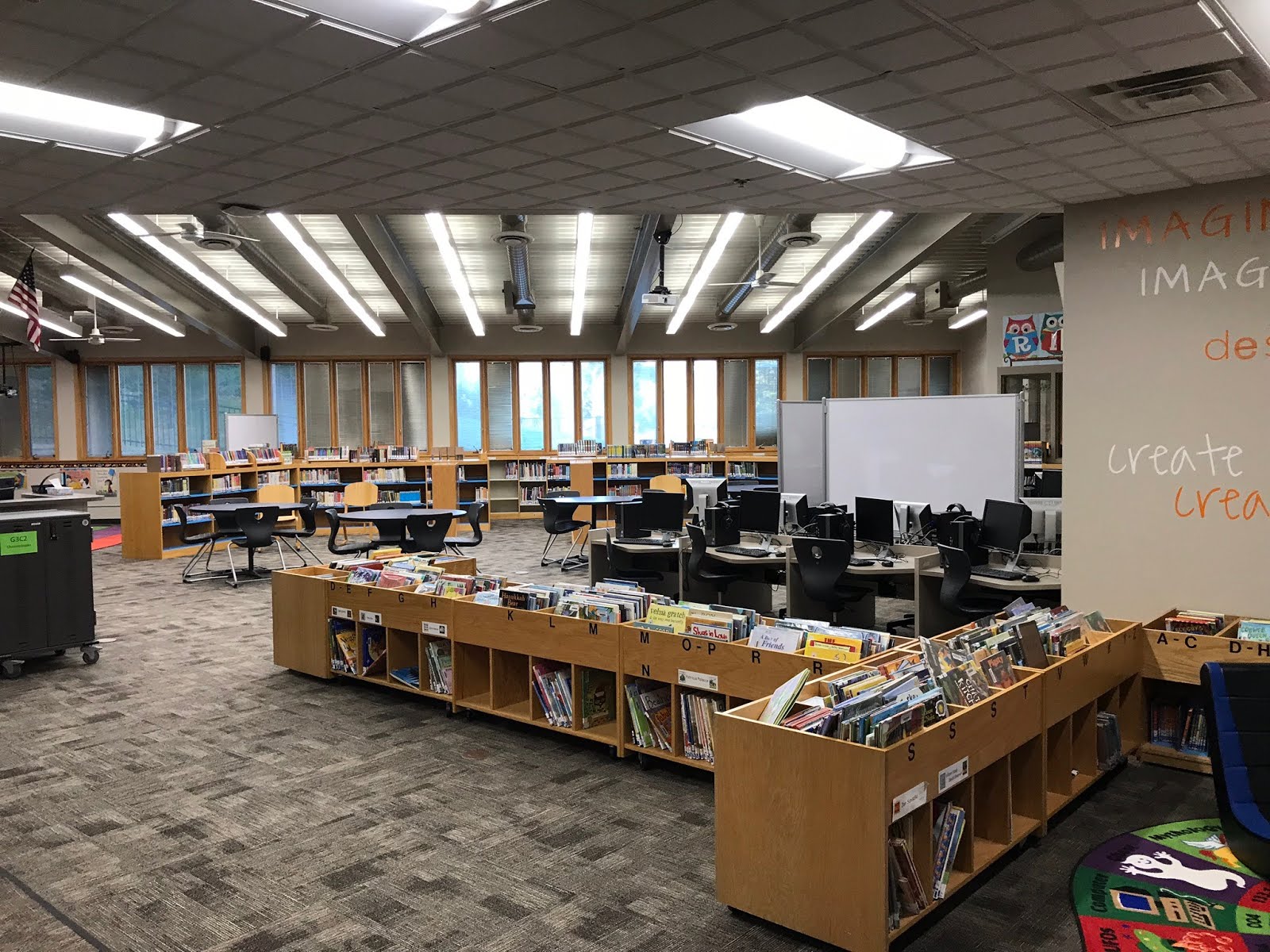
    In the grant proposal, Melinda and the team wanted the space to be flexible with furniture that could easily be moved. They envisioned a variety of spaces within the Media Center for quiet work, reading, collaboration, and large group instruction and meetings. The old checkout desk was large and took up a considerable amount of floor space. Old workstations for desktop computers also used up a large amount of square footage. They wanted furniture that was comfortable and a variety of styles, heights, and types.

    After two summers of work, the current media center space at Scenic Heights is looking great! As you can see from the photos, new furniture makes the space very colorful and inviting. A variety of furniture styles, from low cushions and stools to high top tables and chairs create a wide range of spaces and areas for students to work. A relocated, smaller checkout desk allowed for more square footage to be reclaimed. A large group teaching area was created that can flex depending upon the size of the group.
    Excelsior Elementary Media Center
    At Excelsior Elementary, another media center was remodeled over the past few months. All the carpet was taken out and walls cleared and repainted. A large HDTV was put up for teaching and large group meetings. Windows were replaced that matched the historic architectural style of the original school. Similar to Scenic Heights, the large checkout desk that took up a considerable amount of floor space was removed, relocated, and replaced with a smaller desk. Old workstations for desktop computers were also removed. Media Specialist Erin Carcamo and the staff and students at Excelsior Elementary have enjoyed using their newly remodeled space.

    Clear Springs Elementary Media Center
    The Media Center at Clear Springs Elementary also received some upgrades over the summer. Most noticeable is the new carpeting and paint. Many of the large desktop computer workstations were removed, freeing up floor space. Media Specialist Tiffany Miley created a number of smaller spaces for students within the media center to read, work, and meet in small groups. Some new portable whiteboards on wheels that can stand alone or be joined together in an accordion-like wall were purchased by The Minnetonka Foundation. These function as a divider of space in the media center as well as can be used in individual classrooms. The Foundation is planning to convert one side of these whiteboards into a Lego wall as part of the Minnetonka maker space initiative called The Hub.

    Minnetonka Middle School East Media Center
    photo by Andrea Hoffmann
    At Minnetonka Middle School East, the media center has received a number of upgrades over the past two summers, similar to the remodeled Minnetonka Middle School West media center. This past summer the old six-foot high bookshelves were removed and replaced with four-foot high bookcases on casters, making the media center space feel more open as well as allowing for flexibility in arrangement. Media Specialist Jane Zins and the students and staff of MME are making great use of the space.

    For more information, check out the Minnetonka Design for Learning Page as well as the blog of the Design for Learning Project Leader, Nicole Snedden.


    Minnetonka Middle School East Media Center
    photo by Andrea Hoffmann
    Related Posts:


    Monday, January 9, 2017

    Design for Learning: MMW Media Center Update


    Six months ago I wrote about the work underway on the remodeled Media Center at Minnetonka Middle School West. I posted some pictures during the summer and gave the background of the process. The project was done in two phases over the past two years. The final work was completed this fall and the students and teachers have enthusiastically made use of the space ever since. 


    The video provides a great overview of the new space and includes interviews with students, teachers, and principal Dr. Paula Hoff. Design for Learning is an initiative process in Minnetonka that students and staff work through to reimagine learning spaces with flexible furniture, collaborative meeting areas, and technology presentation spaces. The mission statement of the Design for Learning Advisory Board is "To empower Minnetonka students, staff, and the community  to transform teaching and learning through the design of the learning environment." Every year the Advisory Board awards funding to innovative design projects at each school.  Funding for the MMW Media Center redesign was provided by the PTO and the District. Three other Minnetonka media centers have been remodeled through a similar process in past years. 

    Each morning the Media Center is open an hour before school begins and students can get dropped off by their parents to work in the space. As the video shows, the space is also utilized for staff meetings before, during, and after school as well. Throughout the day students can come to work in the Media Center individually, in small groups, or teachers can bring their entire class to use the space. It's been amazing to see how the same space can be reused and feel entirely different after a redesign!

    Related Posts:

    Monday, September 12, 2016

    Technology Shouldn't Be Absent When the Teacher Is: 5 Ways to Ensure Substitutes Are Ready

    Just like students, sometimes teachers are absent, whether it is for a meeting, conference, or due to illness. In a teacher's absence, it is critical that the substitute teacher step right in without any problems so the learning continues. Because so much instruction is done with the help of technology, it is also essential that reserve teachers have access to and knowledge about using the necessary technology for uninterrupted learning to happen. Here are five ways to ensure it does:
    1. Training
      For many years we have been providing technology training for our pool of substitute teachers. Each year we offer technology classes that reserve teachers can take to better understand our systems such as SMART Boards, iPads, Schoology, Google Apps for Education, and more. We want reserves to be comfortable enough to jump right in where the regular teacher left off. We offer these classes in August and during the school year.  

    2. Access to Necessary Accounts and Data
      To protect student data and ensure security of our systems, regular classroom teachers do not share their personal login username and passwords with a substitute. Instead, our Technology Department generates logins for reserves. Substitute teachers receive this information from building secretaries when they report to the school office at the start of the day.  These accounts and passwords are frequently changed protect data security.

    3. Access to Needed Hardware
      All of our classrooms have a desktop PC workstation connected to the projector, so the hardware and platform is consistent from room to room and building to building. We don't need to worry about the teacher taking a laptop home with them and there not being technology for the substitute. I was surprised recently to hear a teacher from a different district describing how their teachers use laptops but reserves are left without any computer to use since teachers take them home nightly. If your school uses laptops, be sure to have enough available for every reserve teacher so technology access for instruction can remain consistent and available.

    4. Access to Full and Clear Instructions and Files
      Our teachers leave their sub plans and files in a shared network folder that is accessible to reserve with their login. More and more often, teachers are even recording short videos and screencasts with their instructions prior to their absence, speaking directly to the students so it is clear what the lesson and assignment is. They also post this video to their Schoology classroom website and some even let the students know ahead of time that they will be gone. This eliminates any confusing or reteaching of complex content that could occur when a reserve does not fully understand or explaining things the way the teacher wanted them to do.

    5. Access to Help When Needed
      If the reserve teacher needs help, our Media Center staff is their go to point and first stop for technology questions and issues. We also have offered technology training for our paraprofessionals for years, knowing that this is not only important for them so they can better assist students, but also that a paraprofessional may often help the reserve teacher troubleshoot issues if necessary.
    Do you have other tips for successfully preparing your reserve teachers to use technology for instruction? If so, please share them!

    Monday, August 29, 2016

    Orange Frogs: Media Staff’s Critical Role in School Climate

    Image Source
    Today our district media specialists and paraprofessionals took part in an all day workshop on positivity. The training was based on The Happiness Advantage: The Orange Frog Parable by Shawn Achor. Shawn, a former Harvard researcher, has focused much of his work on positive psychology. He and his staff travel around the world speaking and training on positivity in the workplace.

    As our trainer Devin Hughes explained today, happiness is a choice. The Orange Frog story is a parable about the effect that an individual with a positive attitude can have on a workplace. How anyone and everyone chooses to view and react to situations affects both ourselves and those around us.

    Research has proven that our mindset matters, and realizing and remembering this fact is important to maintaining a healthy and happy work environment. Read more details about the parable here.

    Besides the school principal and perhaps the front office staff, very few other staff in a school interact with as many different employees and students as the media staff do. Media staff in our schools are often the first point of contact for many--staff, students, and parents--whether it is a problem with technology or a research question. Therefore, these individuals have a lot of influence on the overall attitude and school culture. If they choose to interact with positivity, it will have a direct correlation and effect on the climate of the school.


    Image Source
    The workshop was a great reminder of this fact and provided staff with a number of ways to remember that what they THINK and what they DO matter. Staff learned how to lead with positive results and nurture habits which result in an increase in productivity and happiness. (Watch the author's TED Talk below at 11 minutes to hear what these habits are.) This, in turn, has a “ripple effect” that touches others around them. I’m excited to see the effects of this work and how it impacts the environment of our media centers at each school!


    Learn more here:

    The Orange Frog Book: Spreading a Positive Story About Creating a Happier, More Productive, More Satisfying Life and Workplace.

    Why Can’t We All Be Happy at Work? Although scientific support for the bene!ts of happiness is mounting, creating a happy and engaged culture requires a new kind of organizational learning.
    • 63 percent of employees worldwide are not engaged in their jobs and an additional 24 percent are actively disengaged.
    • “Although we must continue to find solutions to problems, our social scripts must balance this problem-focused approach with a simultaneous focus on creating positive workplace environments and emotions that foster optimal work performance.”
    • “If Happiness Is a Business Strategy, Treat It Like One.”

    Broadcasting Happiness: The Science of Igniting and Sustaining Positive Change 75% of job success can be predicted from a person’s overall work optimism, positive engagement, and support provision.

    Monday, July 11, 2016

    Media Center Redesign at Minnetonka Middle School West

    [Note updated information on with a video of this completed project can be found here.]

    Photo by Paul Bourgeois
    Phase two in the remodel of the media center at Minnetonka Middle School West (MMW) is underway this summer. Currently the old ceiling has been removed and the grid work for the new one is in place. Lights will be installed shortly. Then new carpeting will be put in along with new furniture. The first phase of this work began last summer with new paint, some pendant lights, and some new furniture donated by the PTO. For more on phase one, plus a look at three other remodeled Minnetonka Media Centers, see this previous postSneak Peek at Two Minnetonka Public School Media Center Summer Remodeling Projects.

    The planning for this remodel began over two years ago with the school principal, Dr. Paula Hoff, Media Specialist Erin Carcamo, and PTO leaders. The PTO's fundraising efforts this past year all went toward this project. In May they held a 5K Color Run. The Color Run was a big success and the money raised will pay for new shelving and furniture. 

    The remodeled space will have multiple areas: collaborative workspaces with mobile furniture, quiet areas for studying and reading, work stations for computers, large panel displays and projectors for group sharing and teaching, small group areas, and flexible shelving for the book collections. Architect drawings of the new media center are below.

    Media Specialist Erin Carcamo is genrefying the school's book collection. Approximately one half of the 14,000 titles will be weeded and removed to fit in the new shelving this summer. She is creating a collection to support the curriculum versus having books in all areas of the Dewey Decimal system. For example, she is increasing the collection of global studies topics to match the needs of students for their classes.  This new format along with the new space will be a welcome change for the students and staff at Middle School West this coming year!