Showing posts with label Leadership. Show all posts

Monday, July 23, 2018

Who am I? How am I Wired? How do I Communicate? Insights Discovery Color Energies


Summer is a time for vacations and relaxing for many people. In education, it is a time when students and most staff are gone. However, for those of us in educational administration working year round, summer is a time to get caught up on projects, get ahead on things for the coming school year when students and teachers return, and also a time for learning. As part of my annual summer learning, each August we have an administrative retreat with a guest speaker/trainer. Over the past 15 years I have been in this job we have had speakers on innovation, change, teams, and other topics. 

By far the most memorable and impactful training we ever had was a few years ago led Scott Schwefel from Discover Yourself. Scott is a Minnetonka Schools parent. His company helps individuals, teams, and entire organizations learn more about their personality style and preferences. He travels around the world giving keynotes and helping individuals and organizations improve how they work with one another. 


You've likely taken a Myers-Briggs test or something similar before  in which you as an individual are categorized as an introvert vs. extravert, thinking vs. feeling, etc. The Discover Yourself training also categorizes individuals into their personality types, but in a much more memorable way (using colors such as cool blue vs. fiery red) and takes it further by helping you realize how each personality type reacts on a good vs. bad day, how others interact to you based on your personality, and ways you can become more aware of and improve your interactions with others and overall leadership. You learn what your dominate and secondary personality energy and communication methods are and the order of preferences you have for all the energy levels. For example, I am Cool Blue followed by Earth Green. 

Prior to our one day training, our group of about 45 administrators each took an online assessment. At the training after learning about the four personality types and doing a number of fun activities to learn more about one another and ourselves, we were given our assessment results and a detailed individual, multipage report about our personality, our preferences, our quirks, what gives us energy and enjoyment, what drains us and what we dread, and more. The report was dead on accurate. It was fascinating to read so much about yourself as well as learn about how you interact with and are perceived by others. Each personality type and energy has its own leadership style and we learned how our styles mesh as well as conflict with others' styles. We learned how to help the members of our team work best with one another based on their personality types and preferences, as well as lead with a much more acute awareness of our personality and its affect on others. 

I would highly recommend this training. It was so impactful years ago that we invited Scott back a second time to do a follow up training session. We also continue to have our new leaders take the personality training assessment and attend training so they are familiar with it. Besides our administrators, we have had our teacher leaders go through this training, too, such as the instructional technology coaches with whom I work. To this day we still talk about individuals' personality types and it has helped us to be so much more aware of how and why people act they way they do. Just yesterday a colleague was confused by the actions of another, and I brought up the personality colors and we talked about the differences to help understand why someone had reacted a certain way. 

You can watch Scott's TEDx Talk above and learn more on the Discover Yourself website.

Monday, March 26, 2018

Effective Media Specialists and Programs in Minnetonka

Last year our media program in Minnetonka was formally reviewed by our School Board. It was the first time a comprehensive review of the media program had been done. Our media department is based on best practices and standards from AASL, ISTE, CSTA, and ITEM. Here is the slideshow from the Board presentation. Our media department co-chairs are Kelli Whiteside and Erin Carcamo.


Future Ready Librarians- source
In Minnetonka, we have one media specialist at each of six elementary schools, one who splits time at both of our middle schools, and one at our high school. Media Specialists at our elementary schools directly instruct students in grades 1-5 each week for about 25 minutes. Our media specialists wear many hats, from teaching to managing the print and electronic resources, providing staff development, being the first stop for technology troubleshooting, to being a building leader. Here is the job description for our media specialists. 

As part of our work last year, we talked about the role of a media specialist and what makes for an effective media specialist in regards to collaboration, instruction, leadership and support. We agreed upon the following:

Collaboration - Collaborating with educators and students to design and teach engaging learning experiences that meet individual needs. Fostering partnerships within the school, District, and broader community.

What should media specialist collaboration look like in Minnetonka?

  • Participates actively in a cross district PLC
  • Promotes sharing of ideas and programs between media specialists
  • Connects with grade levels and departments when they meet as PLCs and as teams to create a cohesive/coordinated instructional plan.
  • Advocates for community connections such as partnerships with public libraries to create opportunities for lifelong learning
  • Develops a quality library collection - print and digital resources, immersion and English programs, connected to classroom curriculum, quality literature
  • Orients towards customer service - supports building efforts in important areas such as testing, assemblies, parent events, etc.
  • Asks for feedback - conducts time studies, surveys, etc. to identify strengths and define goals
Instruction - Providing students and staff with instruction and resources that reflect current information needs and anticipate changes in technology and education.
  • Digital Citizenship/Internet Safety - Uses Common Sense Media and other instructional resources to teach key concepts
  • Media Literacy/Literature Appreciation - Providing access to materials in all formats, including up-to-date, high-quality, varied literature to develop and strengthen a love of reading.
  • Technology Operations/Concepts - Instructing students and assisting educators in using, evaluating, and producing information and ideas through active use of broad range of appropriate tools, resources, and information technologies.
  • Research/Information Fluency - Instructing students and assisting educators in the knowledge, integration and ethical use of quality research tools, both print and digital as well as develop strategies to evaluate information found online
What should media specialist instruction look like in Minnetonka?
  • Initiates opportunities to push into classrooms to teach and co-teach
  • Maximizes the media specialist role as teacher - create opportunities to provide direct student instruction
  • Covers digital citizenship, literature appreciation, research/inform. fluency and technology skills/concepts
  • Leads school and works with district to promote good digital citizenship and educate parents, students and staff (includes Common Sense Media)
  • Offers opportunities for students beyond classroom instruction (news broadcasts, book clubs, computer science clubs, collaborative work time with classmates)
  • Develops and implements elementary, middle and secondary digital citizenship instruction
  • Maximizes the use of District digital tools for instructional purpose (Develops and uses Schoology digital content, integrates iPads, especially 1:1, integrates Google Drive as a teacher and student production/creation tool, seeks to use other online tools to engage students)
Leadership - Providing leadership in the total education program
  • Advocacy - Advocating for strong school library programs as essential to meeting local, state and national education goals
  • Initiative - Positively approach school and District initiatives and innovations and seek ways to support them
What should media specialist leadership look like in Minnetonka?
  • Regularly checks in with building principal(s) to find ways to support building goals and efforts, remembering that principals supervise all teachers.
  • Takes initiative and serves as a catalyst for new ideas and effective collaboration (Take initiative!)
  • Communicates with parents using effective avenues and have a visible presence whenever possible (PTA/PTO groups, newsletters, curriculum night)
  • Connects with District initiatives (For example - coding/computer science, makerspaces, innovation teams, idea hunts)
  • Pays attention to and learn about future trends = personalized learning, makerspaces, genrefication, online learning
  • “Yes and” versus “No but”
  • Maintains a professional social media presence as both producer and consumer (Twitter, LinkedIn, etc.)
  • Leads technology initiatives and participates on building and District committees (Technology Committees, Digital Health and Wellness, Innovation, etc.)
  • Organizes and leads buildings as they prepare for site visits
  • Offers timely professional development and presents to teachers and staff during the school year, at August trainings, and at professional conferences
  • Operates flexibly and responds positively to unexpected challenges
  • Effectively uses the media budget to purchase materials that support District goals and curriculum
Support

What should media specialist support look like in Minnetonka?
  • Manages the physical curriculum including student and teacher materials
  • Serves as the liaison between the building and district Technology Department to ensure technology is working smoothly
  • Manages the physical library space - keeping it organized and ready for all patrons
  • Works with the District office to help order, distribute, and track student and teacher curriculum materials, resources, and technology
Learn more about the media program in Minnetonka:


Sunday, December 25, 2016

The Golden Rule in Cyberspace: My Christmas/Hanukkah Moonshot Wish 2016


"Is God in cyberspace?" is a question that was posed to Thomas Friedman which he addresses in his latest book, Thank You For Being Late: An Optimist's Guide to Thriving in the Age of Accelerations. He recently returned to his home state of Minnesota and spoke at the Westminster Town Hall Forum. I wish I could have heard him in person, but thankfully a recording of the talk is online. I've cued it to the part describing his answer to this question here. After listening to this talk while on a run recently, I bought his book.  

The World Is Flat: A Brief History of the Twenty-first Century was the first book by Thomas Friedman that I read back in 2005. I love his storytelling/news reporting writing style and remember being amazed of the new technologies predicted that he wrote about based on his travels and research. This latest book is similar and provides an update on the rapidly changing world in which we live. Friedman outlines three simultaneous changes that are taking place all at an exponential pace: Moore's law, the market, and climate change.

Regarding technology, our interconnectedness, and the cloud (or as Friedman calls it, the Supernova) he explains that a lot of things in cyberspace like pornography, hate sites, gambling, and now even fake news make it seem like God is absent. However, he also points out that God manifests himself in us. If we want God to be in cyberspace, we have to bring him there by how we behave “with the moral choices and mouse clicks” we make. 

"Everything is now in cyberspace... We are all connected, but nobody is in charge... In this age of acceleration, we are standing at a moral intersection... One person can kill all of us and all of us can fix everything... What is naive is if we I think we are going to be just fine if we don’t scale the Golden Rule."


For almost the past decade as I have been speaking around Minnesota to students and parents about using technology appropriately, I have shown the image pictured above of the Golden Rule. As I do, I ask audiences if any of them see an asterisk at the end with any sort of note stating "*except when using technology." Of course there isn't one, and I point out that that we all need to follow the Golden Rule even when we are using technology.  As I've written before, I  explain to the audience the importance of using technology with empathy, compassion, and integrity. I was pleased to see that Friedman calls for this same thing to happen: as more of us than ever before are connected, the Golden Rule is what will ensure that we interact positively with one another. 

Friedman explains that future “leadership is going to require the ability to come to grips with values and ethics. We need to think more seriously and urgently about how we can inspire sustainable values like honesty, humility, integrity, and mutual respect.” His solution is that we do this through strong families and healthy communities. These communities aren’t just our local neighbors living nearby. Now our community is the entire planet. Mother nature treats us as one, says Friedman, and our interconnected technologies and machines all work as one, so we too must start to realize our communities are all one.” We have to work together globally in order to get everyone following the Golden Rule. My short summary here doesn't really do justice to how well he says it, so please read the book!

Two years ago I posted that my Christmas moonshot wish was for a marriage between Apple and Google. Although that hasn't happened yet, when I look back on that wish now it seems so shortsighted. Truly what the world needs is so much more than just a merging of two tech companies. We need a universal agreement for everyone to follow the Golden Rule as we interact with one another. Teach your children, your grandchildren, your students, and your community the Golden Rule. On this Christmas, let this be our hope and prayer for the future. 

Monday, September 21, 2015

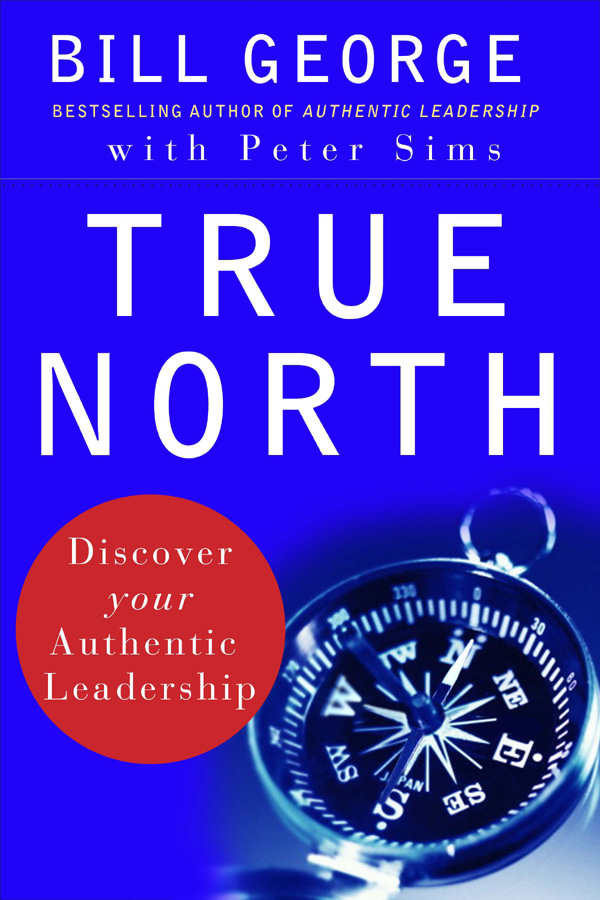
Great Leader/ship Wisdom from Bill George: Finding Your True North

Last week former Medtronic CEO Bill George spoke at Minnetonka High School about leadership. His talk was geared toward high school students, but many parents, community members, and business professionals were present as well. He did a nice job sharing his wisdom and ideas not only about leadership, but life in general. He encouraged the students to make the most of their lives, emphasizing that life is precious and you only have one life to live. He spoke about the importance of having a mission in life, doing what you are both good at and what makes you happy. He explained that this inner self is your True North.

Bill shared that many leaders who he met did not have a purpose, or postponed their purpose for promotions, wealth, status, power, and other things that didn't make them happy. He encouraged the students to do something that helps others. He repeatedly talked about being a servant leader, thinking about the customer or individuals who are affected by the work you do and the decisions you make. Bill also explained how the best leaders also care and serve the individuals and teams who they lead, encouraging them and caring for them, in turn making them better. It was great to hear such care and empathy expressed by a CEO. I hope the students will go on to become great leaders with integrity and compassion.

I didn't write down everything he said, but did Tweet a few of his comments and quotes that I really liked.  I've Storified them below, and hope you gain further insight into Bill's advice by reading them: